
In the landscape of industrial automation and smart logistics, the hardware used for data capture determines the efficiency of the entire ecosystem. A handheld mobile terminal—often referred to as a rugged mobile computer or industrial PDA—is an integrated device that combines the capabilities of a high-performance computer with professional-grade data capture tools, such as barcode scanners or RFID readers.
Unlike consumer-grade smartphones, these terminals are engineered for 24/7 operation in demanding environments. For procurement managers and OEM project leads, understanding the technical architecture of these devices is the first step toward reducing Total Cost of Ownership (TCO) and ensuring long-term field reliability.
Technical Architecture of Industrial Handheld Terminals
At its core, a handheld mobile terminal is defined by its ability to process data locally while communicating with a centralized ERP or WMS (Warehouse Management System) in real-time. The internal architecture typically consists of several layers optimized for reliability.
Processing Core and Operating System?
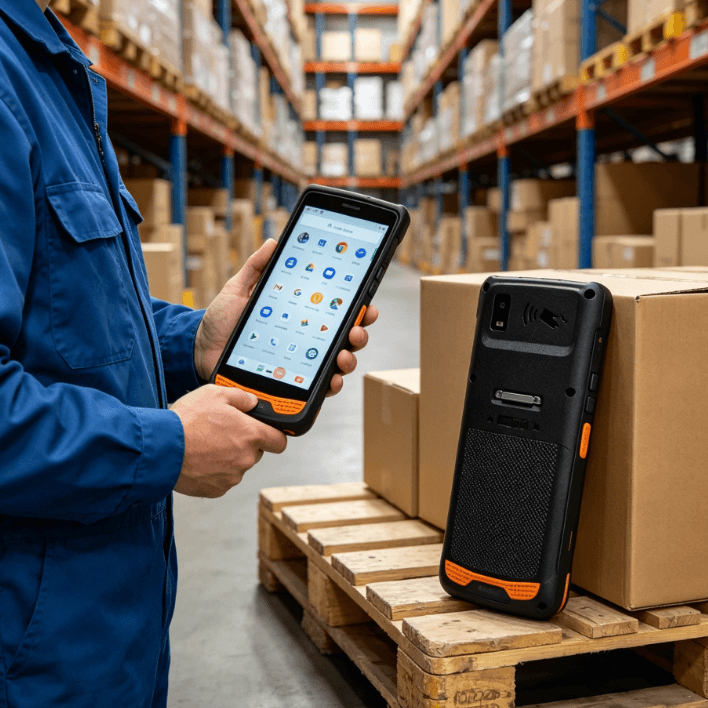
Most modern terminals, such as those featured in the Kroniix Mobile Terminals collection, utilize the Android OS. This shift from legacy Windows systems is driven by the need for better security, app compatibility, and developer support.
- Processor (SoC): Industrial terminals usually feature Octa-core processors optimized for low power consumption.
- Memory: 4GB RAM / 64GB ROM is standard for transactional tasks, ensuring fluid multitasking between heavy database apps.
Specialized Data Capture Engines?
The “terminal” aspect refers to its role as an endpoint for data. This is achieved through integrated engines from manufacturers like Zebra or Honeywell that are embedded directly into the PCB, offering superior speed compared to camera-based scanning.
- 1D/2D Barcode Scanners: High-speed imagers designed for rapid-fire scanning in low light.
- RFID/NFC: For asset tracking, modules allow for reading tags from several meters away.
- Connectivity: Enterprise terminals support dual-band Wi-Fi with fast roaming protocols (802.11r/k/v).
Industrial Terminals vs. Consumer Smartphones
For B2B buyers, the “price-tag trap” often leads to considering consumer tablets for industrial use. However, the technical differences in design intent are significant for long-term ROI.
| Feature | Industrial Handheld Terminal | Consumer Smartphone |
|---|---|---|
| Durability | MIL-STD-810G; 1.5m+ drop rating | Fragile; requires external cases |
| IP Rating | IP65 to IP68 (Dust & Water tight) | Usually IP67 (Limited exposure) |
| Battery Life | 4000mAh – 6000mAh (Swappable) | Fixed battery; 10-12 hours use |
| Scanning | Dedicated Global Shutter Imager | Rolling shutter camera (Slow) |
| Lifecycle | 3-5 years support & parts | 1-2 years before obsolescence |
Key Performance Parameters for Enterprise Procurement
When evaluating a handheld mobile terminal for a high-volume project, engineers and procurement specialists must look beyond the basic datasheet. Real-world performance depends on several critical environmental and mechanical factors.
Environmental Tolerance and IP Ratings?
In cold-chain logistics or outdoor construction, the terminal must withstand thermal shock. The IP (Ingress Protection) rating is vital; an IP67 rating ensures the device is fully dust-tight and can survive immersion in water, which is a baseline requirement for port operations or outdoor utility work.
Ergonomics and Form Factor?
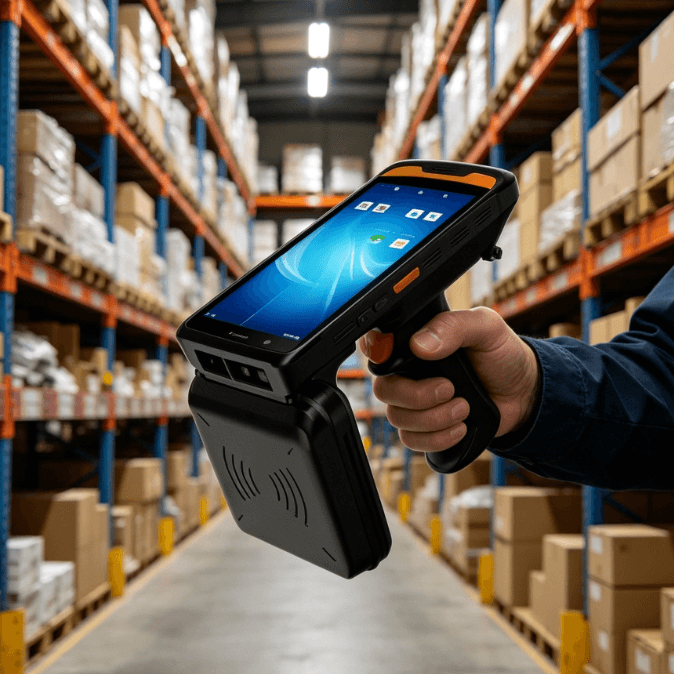
The physical design directly impacts labor productivity. A “Pistol Grip” is ideal for high-intensity scanning in warehouses, while “PDA-style” terminals are preferred for field service where portability is key. Wearable terminals are used in “hands-free” picking environments to maximize speed.
Battery Management Systems?
A “hot-swappable” battery is a critical transactional requirement for multi-shift operations. It allows a worker to replace the battery without shutting down the device, maintaining uptime across 16-24 hour work cycles.
Customization and OEM/ODM Strategy
For large-scale deployments, off-the-shelf solutions may not meet specific software or branding requirements. Partnering with a specialized manufacturer allows for deeper hardware and software modularization.
Hardware and Software Modularization?
- Hardware: Adding specific biometric sensors or custom RFID antennas for specialized tracking.
- Software: Injecting custom OS images, MDM (Mobile Device Management) enrollment, and disabling non-essential services for increased security.
- Branding: Private labeling and custom housing colors to match corporate identity.
Procurement Workflow for Industrial Projects
When moving toward a purchase, the following criteria define a reliable industrial hardware partner. Commercial guidance is essential for large-scale hardware rollouts.
Technical Validation and Lead Times?
- Requirement Definition: Map out the OS, scanning distance, and environmental stressors.
- Request for Quote (RFQ): Provide the supplier with estimated annual volume and certifications.
- Technical Validation: Review samples for software compatibility with your existing WMS.
- Mass Production: Monitor lead times, which typically range from 4 to 8 weeks.
Summary
A handheld mobile terminal is a mission-critical tool for modern industrial workflows. By prioritizing ruggedized specifications, dedicated scanning engines, and long-term lifecycle support, enterprises can ensure their digital infrastructure remains resilient. Selecting the right hardware involves balancing ergonomic needs with environmental constraints and ensuring the supplier can provide the necessary OEM customization for future scalability.
FAQ
1.Can I use a handheld mobile terminal for RFID and Barcode scanning simultaneously?
Yes. High-end terminals often feature both an integrated 2D imager and a UHF RFID module. This is common in retail inventory management where different types of tagging are used across the supply chain.
2.What is the typical lead time for a custom handheld mobile terminal project?
For standard configurations with minor branding, lead times are usually 4-6 weeks. For full ODM projects involving new PCB layouts or housing molds, expect 4-6 months from initial design to mass production.
3.How do IP65 and IP67 ratings differ in a warehouse environment?
IP65 protects against water jets (ideal for wash-down environments), while IP67 protects against full immersion. For most indoor warehouse applications, IP65 is sufficient, but IP67 provides higher insurance against accidental outdoor exposure.
4.Are these devices compatible with Android Enterprise Recommended standards?
Many professional-grade terminals are designed to meet AER standards, ensuring timely security patches and support for at least one major OS upgrade, which is vital for long-term digital security.
Reference Sources
Official ISO standard for barcode print quality and testing. iso.org
Standard for local and metropolitan area network roaming. ieee.org
Degrees of protection provided by enclosures (IP Code). iec.ch
Global certification for industrial hardware and compliance. sgs.com